Researchers

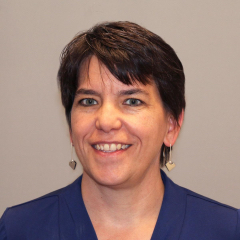
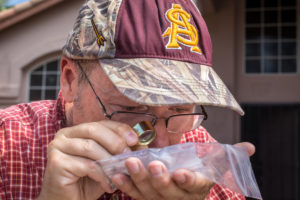
Meenakshi Wadhwa (Director, CMS and Professor, School of Earth and Space Exploration) Ph.D. Washington University (1994) - Dr. Wadhwa (left) is broadly interested in deciphering the origin and evolution of our solar system and planetary bodies in it through geochemical and isotopic means. She utilizes high precision mass spectrometric techniques to investigate a wide range of solar system materials, including meteorites of asteroidal and Martian origin, Moon rocks (from the Apollo missions and lunar meteorites), and other samples returned by spacecraft missions such as Genesis and Stardust. In studying these diverse materials, her goals are to i) decipher the processes involved in their formation using trace and minor element distributions and stable isotope systematics; and ii) determine their time scales of formation using a variety of radiogenic isotope chronometers.

Michelle Minitti (Assistant Director and Faculty Research Associate, CMS) Ph.D. Brown University (2001) – Dr. Minitti (right) utilizes tailor-made laboratory analogs and terrestrial analogs of Martian materials to pursue experimental and analytical investigations aimed at understanding the Martian meteorites and their context in Mars remote sensing datasets. She is particularly interested in the role of water in igneous and weathering processes. Dr. Minitti is also a Co-Investigator on the Mars Hand Lens Imager (MAHLI) camera slated to investigate Mars as a part of the 2011 Mars Science Laboratory mission.

Carleton Moore (Founding Director, CMS and Faculty Emeritus, Dept. of Geological Sciences and Dept. of Chemistry and Biochemistry) Ph.D. California Institute of Technology (1960) – Dr. Moore was editor of the journal Meteoritics for 20 years. He was a member of the Lunar Sample Preliminary Examination Team for the Apollo program and a principal investigator for the returned lunar sample program for all the Apollo missions. Dr. Moore’s research efforts are focused on the geochemistry of meteorites, lunar samples and analytical geochemical problems. Analytical instruments or techniques used in these investigations include atomic absorption spectrophotometry, gas chromatography, ion chromatography, neutron activation analysis, X-ray fluorescence spectrophotometry and electron microprobe techniques together with wet chemical analytical methods and standard methods for the characterization of meteoritic organic compounds. Additional research interests take advantage of the great statistical depth present in the Center for Meteorite Studies collections, including statistical studies of meteorite compositions and homogeneity, the origin of the low calcium achondrites, trace elements in iron meteorites, and high- and low-temperature phases, including organic compounds, in carbonaceous chondrites.

Laurence A.J. Garvie (Collections Manager) Ph.D. University of Bristol (1992) - Dr. Garvie (left) deciphers early Solar System processes through the use of innovative, high-spatial-resolution electron microscopic and spectroscopic studies of meteorites. His studies primarily focus on carbonaceous chondrite meteorites, which provide a unique record of the physical and chemical processes that shaped our Solar System. His current projects are roughly divided between mineralogical studies designed to reveal the structure and formation conditions of the abundant phyllosilicates in the CI and CM chondrites, and studies of the structure, distribution and formation conditions of organics in the carbonaceous chondrites. Highlights of Dr. Garvie's research include the discovery of serpentine nanotubes, polyhedral serpentines, hollow and solid nanoglobules made of amorphous carbon, and a ubiquitous clay-organic carbon relationship in these chondritic meteorites. The latter discovery is of particular interest since understanding the relationship between organic matter and the inorganic components in primitive meteorites has the potential to reveal important new information on abiotic organic processing during Solar System formation. He also leads projects designed to understand the chemistry and mineralogy of rock surface coatings, with particular emphasis on the laminated, Mn-rich coatings of arid terrestrial environments. Dr. Garvie serves as an Associate Editor for American Mineralogist.

Amy J. G. Jurewicz (Faculty Research Associate) Ph.D. Rensselaer Polytechnic Institute (1986) - Dr. Jurewicz's (right) research currently focuses on the recovery and analysis of the GENESIS solar-wind collector materials. Solar wind is a direct analog of the early solar nebula, so from its composition we will glean insight into how our solar system formed. GENESIS is a NASA mission which collected solar-wind sample for two years, prior to a hard landing in Utah during the return to Earth. See the GENESIS website for more information. Before GENESIS, Dr. Jurewicz's research included work on a number of NASA missions, as well as the fabrication of meteorite analogs for the purpose of determining how one meteorite could be formed from another through natural, early solar system processes.

Philip E. Janney (Associate Research Scientist) Ph.D. University of California, San Diego (1996) - Dr. Janney (left) uses stable and radiogenic isotope systems to understand the timing and processes involved in the early history of the Solar System, from the condensation of the first solids to the differentiation of planets. A major current emphasis is the study of Mg and Si isotope fractionations in refractory inclusions in chondrites and laboratory-produced analogs to understand the role of evaporation in the history of these earliest-formed solids. Dr. Janney is also participating in several projects using the short-lived radionuclide systems 26Al-26Mg, 60Fe-60Ni and 182Hf-182W to investigate the formation of chondrites and differentiated meteorites. Dr. Janney manages the new Isotope Cosmochemistry and Geochronology Laboratory in the School for Earth and Space Exploration (founded and directed by Dr. Meenakshi Wadhwa), which features a 1000 ft.2 clean laboratory and a Thermo Neptune multicollector plasma mass spectrometer.

Rebekah Hines (Research Specialist Sr.) M.Sc. University of Saskatchewan (2001) – Rebekah’s (right) background in natural history collection management and conservation, educational outreach as well as isotope geochemistry enables her to serve a multi-disciplinary role in the CMS. While the majority of her time is spent supporting the research performed in the clean chemistry laboratory and on the Thermo Neptune mass spectrometer in the Isotope Cosmochemistry and Geochronology Laboratory, she also takes an active role in CMS outreach programs as well as curation of the meteorite collection. In addition to the development and improvement of laboratory techniques, her interests include using stable and radiogenic isotopes to quantitatively resolve paleoclimatic parameters.

Audrey Bouvier (Postdoctoral Research Associate) Ph.D. Ecole Normale Supérieure de Lyon, France (2005) - Dr. Bouvier (left) is interested in unraveling the chronology of planetary processes that took place during the first few million years of Solar System history such as the formation of the first condensates in the solar nebula, and the accretion and evolution of planetesimals. Her studies are based on short- (26Al-26Mg) and long-lived (207Pb-206Pb) chronologies of refractory inclusions and chondrules from primitive chondrites, and minerals from differentiated meteorites. Her other research interests include the Mg isotopic composition of planetary objects used as a tracer for reservoirs and processes in the protoplanetary disk, and also to study the composition of terrestrial planets (e.g., Earth, Mars) and their global differentiation history from Nd, Hf and Pb isotope systematics.