News
Announcing the Nininger Meteorite Awardees
We are pleased to announce that Maizey Benner, a Ph.D. Candidate at the University of Arizona is the recipient of the 2023-24 Nininger Meteorite Award, and Daniel Sheikh, a Ph.D. candidate at Portland State University received an Honorable Mention for the award. Maizey’s paper “Microstructural analysis of phosphorus (P)-bearing assemblages in type 3 chondrites: Implications for…
Nininger Meteorite Award deadline extended to April 30th!
The application deadline for the Nininger Meteorite Award has been extended to April 30th! The Nininger Meteorite Award recognizes outstanding student achievement in the meteoritical sciences as embodied by an original research paper. Papers must cover original research conducted by the student and must have been written, submitted, or published between January 1, 2023…
Thank you, Sun Devil Nation!
From all of us at the ASU Buseck Center for Meteorite Studies, sincere and heartfelt thanks to everyone who supports our mission – on Sun Devil Giving Day, and every other day. We couldn’t do it without you!
Today is Sun Devil Giving Day!
March 20 is Sun Devil Giving Day! We hope that you will take some time to enjoy what you have helped create and join us to celebrate the many amazing discoveries accomplished in BCMS as a direct result of your generosity. Join us on Facebook, Linked In and X (formerly Twitter), or go directly to…
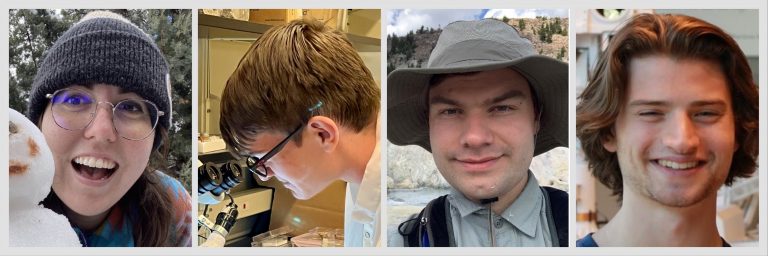
2025 Nininger Student Travel Awardees Announced!
The Buseck Center for Meteorite Studies and School of Earth and Space Exploration are pleased to announce the winners of the 2025 Nininger Student Travel Award. The goal of this award is to support attendance of the annual Lunar and Planetary Science Conference (LPSC) for at least 4 undergraduate and/or graduate students to present their…


